Although Porsche is working to reduce complexity and the number of variants on its models, it will offer a wide range of options to encourage buyers to personalise their cars. Different wheels, high-end interior finishes and the Paint-to-Sample programme will all be available.
How new SUV will fit into growing line-up
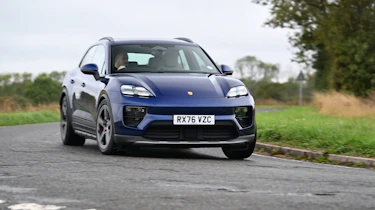
Porsche confirmed to investors at its recent capital markets day that it is to pursue a mixed-powertrain strategy, targeting a ratio of 2:1 for ICE models vs BEVs. The new mid-size SUV will join the existing Cayenne and Cayenne Coupé, as well as the forthcoming flagship SUV codenamed K1 due in 2029, as the brand’s ICE options. On the electric side are the existing Macan and Cayenne EVs.
Porsche also specified a plan for its sports cars. Despite the 718 previously being on thin ice, CEO Michael Leiters confirmed the electric car will reach production in 2027, first as an open-top Boxster and later as a coupé. Above this will sit the 911, which will gain more derivatives and variants. Topping the range will be a mid-engined supercar, previewed by the Mission S Concept, due later in the 2030s.
What’s less clear, however, is Porsche’s saloon strategy. Plans to produce a next-generation Taycan and an electric Panamera appear to have been frozen, and with the brand scrapping its SSP Sport development programme, there’s no longer an in-house architecture for the cars to utilise.
Instead, if either is given the green light, it would need to run on the Volkswagen Group’s SSP platform that won’t be in mass production until at least 2029. But the plan would be to bring them to market as quickly as possible, with board member for research and development Michael Steiner explaining: “[While] the new Macan development will be slightly shorter than 36 months… we’re aiming to get our development times even shorter, to 30 months.”
The combustion-powered Panamera will be given another minor update in the short term, and we wouldn’t be surprised to see another update for the Taycan as well.