The last time Ashley Walters graced Time Out towers, it was at the ash-end of his days and he arrived on (in the words of colleagues who were present) ‘a kind of robotic AI scooter’ that proceeded to follow him dutifully about the office. This time, he doesn’t even need a droid Segway to stop the place in its tracks. Sitting in reception in his Nike gear and a pair of sunglasses does the trick. As the kids would probably say, the riz does the work for him.
Interviewing the born-and-breed south Londoner is a disarming business. He doesn’t need much (okay, any) prompting to open up about a life so packed with incident – most of it positive, some of its decidedly not – that he’s already published his memoir, Always Winning.
The actor, musician, filmmaker, and one-time So Solid Crew member would be the first to admit that he always been winning. There was a 16-month spell in young offenders’ institute as a 20-year-old, the nadir of an often-stressful first brush with fame. That experience helped inspire 2004’s Saul Dibb-directed , a much-praised streets-eye view of Hackney gang life in which he played a young man freshly out of prison. Since then, there’s been a wealth of film and TV roles, culminating in , and, most impactfully, Netflix smash hit , in which he played a cop trying to make sense of a senseless murder.
His acting career has been turbo-charged by its success. But it’s his newfound status as a filmmaker that’ll surprise many. His directorial debut, , is a gripping prison drama that boldly confronts wounded masculinity and queer identity in an environment Walters knows only too well. Black teenager Troy, played by actor Tut Nyuot, is our conduit through its claustrophobic lock-up, with its brotherhoods and beefs. Walters’ old pal Stephen Graham provides stalwart support as a youth worker trying to offer the kids a way forward. ‘Walters’ keen eye for the lads’ wounded and shame-laden masculinity is exhilarating,’ raves Time Out’s .
The newly-minted film director has long since left the big city and headed for the serenity of Kent’s Herne Bay with his family. He’ll be heading back into town to introduce to BFI London Film Festival audiences this week. If things go to plan, it’ll be the first of many.
What does being at the LFF with your first feature film mean to you?
It’s an honour. I’ve seen the hype and the magnitude, and what it means [for] new filmmakers. I was there for Daniel’s (Kaluuya) film , with Kibwe (Tavares) and Kane (Robinson), who’s a great friend of mine. People might think that I’ve been given an easy ride in directing because of who I am, but it’s been tough. Most people have been telling me: ‘No, we don’t want you to direct’. And these are people I’ve worked with for years.
Why was that?
People struggle to see you as more than one thing in Britain. I never feel that when I’m in America. The minute you’re multi-faceted here, people get stressed about what to call you or where to put you. Every time I said I would like to direct an episode of or can I direct an episode of , stuff that I was executive producing, the team would be like: ‘No, you haven't got enough.’ I hate hearing no, so I went and did a short film.
How did come together? It’s written by Nick Love, but it seems to have a lot of you in it.
We were out in South Africa shooting , which Nick was the writer on, and we enjoyed working together so much, we decided to make a film together. Less than a week [later], he sent me the script.
What was the script like?
I was blown away. I’d never really wanted to direct anything that people would expect me to direct, and I felt like this was in that space. Young offenders, the Black lead, crime, etc. But then the vulnerability of Troy, the way he tries to survive, and the exploration of his sexuality in that space. Considering how homophobic those spaces can be, I just felt like it was a story I had to tell. I'm not gay, I'm not queer, I've never been in relationships with men, but I've seen a lot of men marginalised because they are gay, especially Black men. In the Black community it can be really tough to come out. Obviously, I have a great understanding of the young offenders institute from being in there myself, but it was that part of the story I really wanted to tell. Especially after doing , creating conversation felt like an important part of storytelling [for me]. I really think there's a conversation to be had about Black queerness, and where that sits and how people think about that.
What are you like on set?
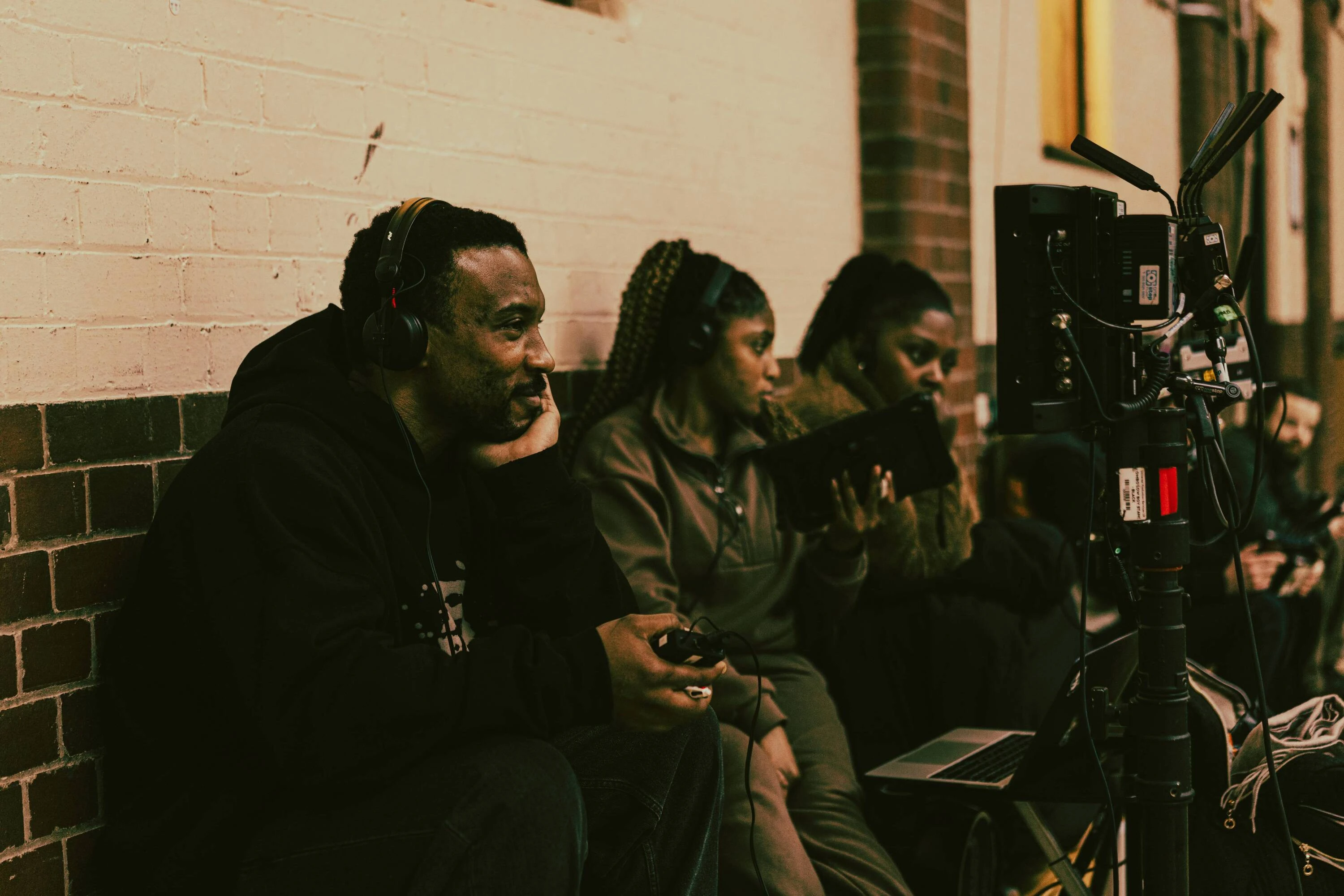
There’s two sides to me: I’m playful and I like to create a really safe space, and that involves not creating too many rules. But then in my first week of filming on the Friday, I quit. I was that frustrated. We didn’t have any time to finish the scene. I got one take and then they shut me down, everyone turned the lights off, the line producer was like nah. And I was like, fuck this, I'm not doing it anymore. My aim is to take stress out of the environment, no matter what's going on behind the scenes, because that’s how I expect to be treated by directors.
How long did you quit for before you took on the job again?
Oh, like five minutes. It wasn’t a ‘quit’ quit.
Back in the late ’70s, started a debate that ended with the borstal system being changed. Are you hoping to spark that kind of debate?
100 percent. I'm glad you picked up on that because it's something I put in the film but didn’t focus on it too much. I went into a few prisons before we started shooting to spend time with inmates. It was clear that there’s a lot of maintenance but not a lot of rehabilitation happening there. I don’t blame the prison staff, because they have nothing to work with. When I was in prison, some of those staff members helped me get through. I wanted that to be felt and hence () Claypole was a really important character – someone who has come from where these kids have come from.
Did making this film feel cathartic or was it triggering?
It wasn't triggering. I've had so much therapy since then that I’ve been able to deal with it, but it probably was cathartic in the sense that everything you see in that film was the way I saw it running when I was in jail. None of the cast had been to prison, so they had a lot of questions for me: how should I be feeling in this moment or what should I do in this room? And it felt really good to have those answers.
I’ve had so much therapy since then that I’ve been able to deal with it
was a phenomenon. Do more people want to talk to you about that or ?
. The audience was so vast. didn’t really have the same impact around the world, but with you can rock up in, like, Bali and they’ll know just as much as they do in London. It's a beautiful thing but it does get annoying sometimes. I had a bit of anonymity [before].
How did it change your career?
I was about to stop acting before . I felt like I was hitting the ceiling and it wasn’t working out. I didn’t have my visa for the US so I couldn’t manoeuvre. I love directing so much, that [I thought] I should just focus on that. But then happened and since then, I've been getting a lot of acting offers. So maybe it’s not over.
So coming out of , there wasn’t a lot of stuff waiting for you?
There was stuff waiting for me, just not stuff I wanted to do.
What was the first moment it dawned on you that was a phenomenon?
Actually for about 48 hours I thought no one was watching it. I was like, maybe this is a fail? And then it just went (). It was the awards when I realised what it had done. Being nominated for the Critics Choice, the Emmys, and then the Golden Globes, I didn't see that on the cards for me. Having people like Bryan Cranston come up to you and be like, ‘Man, I watched and you are amazing,’ and just giving you the time of day. Delroy Lindo and Dwayne Johnson and Kevin Hart and these people I’ve always admired shaking my hand made me look around and think, ‘Fucking hell, what have I done?’
Do you play it cool when you meet your heroes?
I'm done with all that now. I'm fan-ing out. Snoop Dogg interviewed me on the red carpet at the Emmys and... I’ve not been speechless too many times in my life, but that was one of them.
Did help you have conversations with your kids?
Yeah. Mate, I was oblivious before that. I’m not old that I’m so out of touch with what the kids are kind of doing, but this was over my head. I had to do quite a bit of research, which is what took me into Andrew Tate and the manosphere. It’s scary. After watching that show, my wife and I are very cautious about what what our kids watch on the internet. We’re trying to get my son back into chasing squirrels.
What’s your relationship with now? Was Dushane harder to let go of than other characters you’ve played?
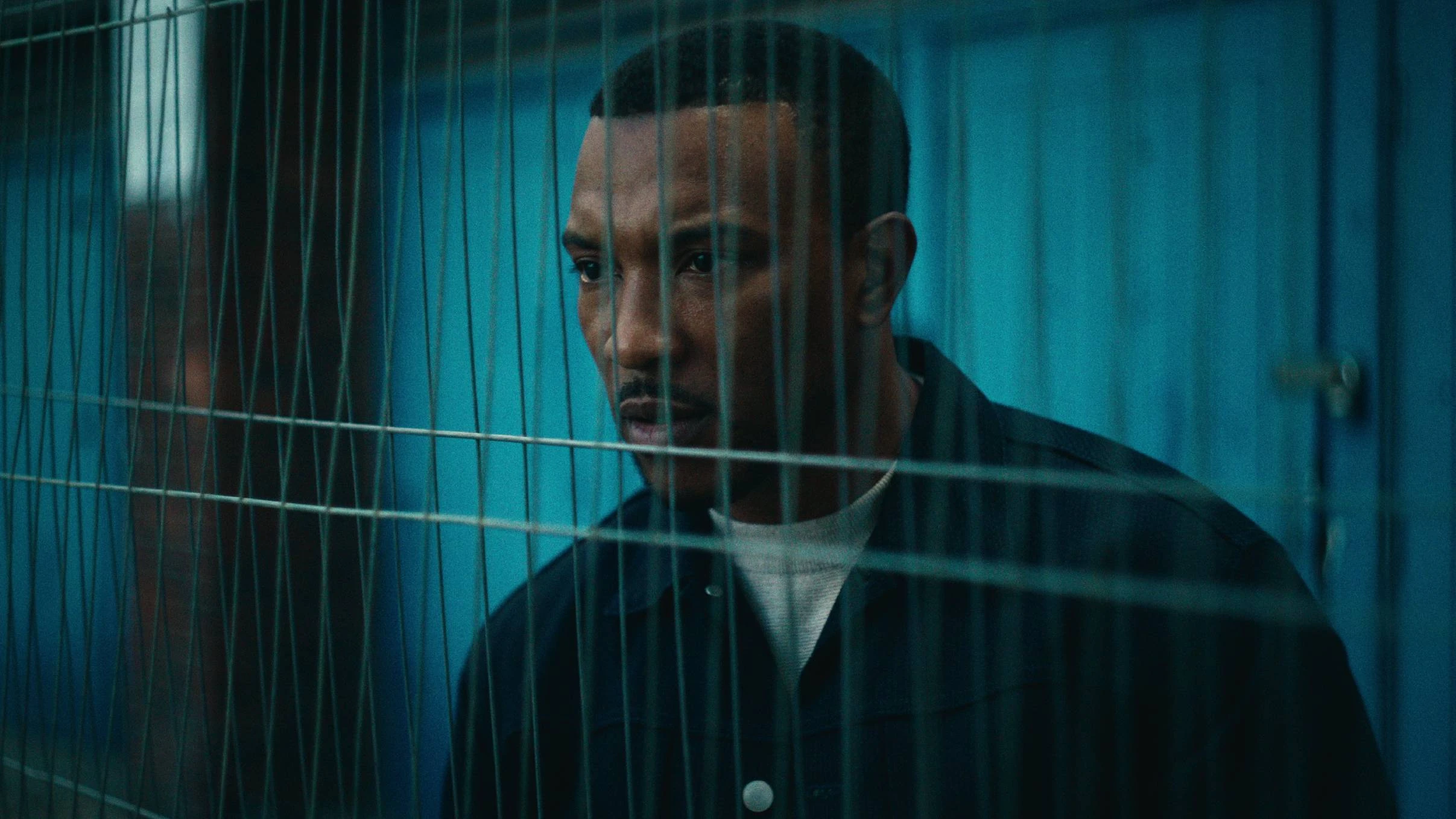
It was a tough one. I knew I couldn’t do it anymore but I miss it like crazy, man. I loved that show like it was my own child. So, yeah, bittersweet, but in order for me to grow I had to step out of that role. I’m really proud that the world is so strong that they’re able to spin off of it now, and you know you've got Barry’s (Keoghan) prequel coming, Jonny Boy, and Jaq’s show as well with Jasmine (Jobson). I’m always there if they need me. So anything they wanted me to do, whether it be to direct a couple of episodes – I'm not begging by the way! – I would always do that.
So, no conversations about coming back in flashback, or as ghost Dushane?
) You could have a ghost of Dushane. I’ve always said you never actually saw Dushane die. You saw him stop breathing, but who knows what happened after that?
The final showdown between Dushane and Sully was an incredible moment. How challenging was it to film?
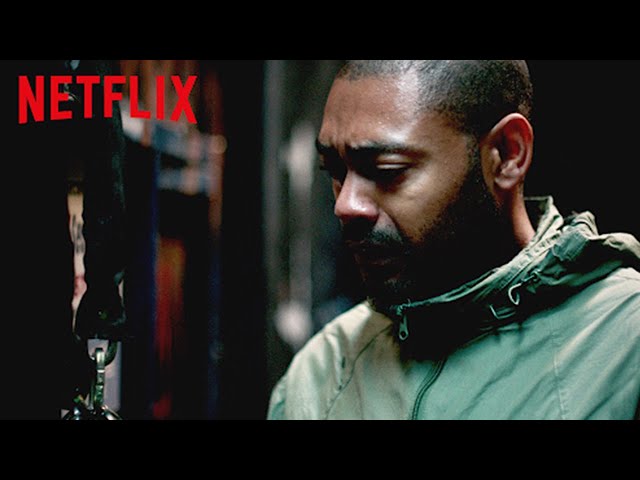
It was challenging. First of all, Kane is just an excellent actor. Whenever you're in a scene with him, it becomes a competition because he’s doing really cool things: shouting through the fence with one solitary tear dropping down his cheek as he talks about ‘being monsters’ – and these are all improvised lines, by the way. That was a difficult scene to shoot because we knew it was the end of the characters' relationship and probably the last time we were gonna work together on this job, and we’d had such an amazing time. We grew up on that show together.
It was the last scene you filmed?
Yeah, it was. It was the end because no one could write that scene. Not a lot of people know about this, but in some of the early drafts it would get to that scene and Ronan would write: ‘Kane and Ash are going to work on this – I don’t know what it’s going to be.’ We were all like, ‘Bro, you’ve got to write something.’ And eventually he did and it was so poetic. The idea of the wall and us being on two different sides of it and having that conversation through it was art.
I knew I couldn’t do Top Boy anymore but I miss it like crazy
What happened when they called ‘cut’ on it?
A lot of tears, a lot of emotion. A lot of tired and ratty people as well because it was a night shoot, we finished at, like, 4am. But we got it done, man.
Are you ambitious to direct more films?
Yeah, in harmony with acting. I feel like directing is going to be my resting place but I've still got a lot of acting hunger in me.
Would you want to direct a So Solid biopic?
If I was asked, I would consider it, but it’s not a genre I like. Look, it has been done well. Everyone hates . I like . I've seen it three times in the cinema. But on the whole they never really explore the people in the way I would like to explore them. But it would be so political to get people together and on side. There have been scripts and drafts knocking around. I think ( ) Aml Ameen is producing a version of it and he’s been talking with Mega (Megaman). There’s a script that’s been written. I don't know whether I'm too close to it to do it justice.
Is there peace in those waters now?
There’s definitely peace. Whether people are having Sunday dinner with each other, maybe not. I hardly talk to anyone from So Solid these days. I still have some great connections there, Lisa Maffia, Romeo, but it’s tough for me because that experience comes with a lot of trauma. There’s a lot of things that went on behind the scenes, between people, that I find it hard to get past.
You left London for the seaside a few years back. Did you always want to live by the sea?
I always had it in the back of my mind that I would make money, I would buy a house in the country with big gates around it and feel protected and make my own sort of sanctuary. I guess my therapist will say that there’s some stuff behind that.
Are you a big fish and chips guy?
We moved there for oysters. I’m a big oyster fan. We used to go up to Whitstable in the summer on the beach and have oysters and beer, when I was drinking. We couldn’t afford Whitstable – it’s like the Shoreditch of Kent – so Herne Bay was the next best town.’
I’m thrown into a lot of hostile environments that make you remember why London is so great
How would you describe your relationship with London now?
London is like my side chick. It used to be my main squeeze, but now it’s been slightly demoted to my side chick, but I’m very passionate about her and we make love regularly. Look, I love this place: I grew up here; it’s been my inspiration; it’s protected me. I've never been to a more diverse melting pot of people, and I’ve never been accepted as much as I've been accepted here, especially with the colour of my skin. I’m thrown into a lot of hostile environments that kind of make you remember why London is so great. I’ve shot in Budapest for 10 months doing and I had the hardest time there. It was so difficult to even get up in the morning because people are really ignorant sometimes. As much as the right wing stuff is happening, and you're seeing the marches, it's a small amount of people that are involved in that compared to when I go to Peckham and to communities in east London and I see Asian people mixing with whites with Black people. That’s my London, and that’s the London I want to protect.
What would be your ideal day in the city?
I will probably go to the Hoxton AA meeting. I love to do that when I’m in town. And then it will be about food and family. We don’t get to be here a lot, so I’d spend some time with my mum, probably go round and see some of my cousins, and then our favorite food spot to go in London is Tasty House on Denmark Hill. It’s the best Chinese takeaway in the world. I’ve gone there since I was maybe 12 years old, and it’s the same family running it. We’ve been known to send a cab to bring us food all the way to Herne Bay.
What’s your order?
I get roast chicken, roast duck on egg fried rice, very spicy with some barbecue sauce and chilli oil. Most beautiful thing you could ever eat, man.
Animol has its UK premiere at the BFI London Film Festival.
Everything you need to know about this year’s BFI London Film Festival.