Headlights are, if anything, one of the less intriguing aspects of the mid-engined, four-wheel drive, 2+2 Panther Solo 2, but they were at least appropriately odd. Whether they qualify as true pop-ups or not is open to interpretation, as they spin rather than rising above the bodywork, the cover that normally hides them then acting as the bezel when the lights are switched on. Ultimately as the headlight rotates around its axis, it’s no mere covered lamp.
At a glance there’s nothing special about the pop-ups in the second-generation Mazda RX-7. But it’s more what they do when they aren’t popped up that makes these ones interesting. One downside of retractable headlamps has always been the slow process when flashing your lights for any reason, as you have to wait for them to appear. The FC RX-7 got around this by including a window in the bumper, so you could flash away without troubling the pop-up motors.
Picture credit: Karissa Hosek/ RM Sotheby's
What’s better than a pair of retractable headlights? A quartet, that’s what, and that’s what you’d find on the barmy Gandini-designed Cizeta V16T launched in 1991. This otherwise Lamborghini Diablo-styled supercar (with four more cylinders, owing to its V16 engine) goes two better than the Lambo, with tandem pop-ups at both sides… in addition to corner lights sourced from the E31 BMW 8 Series, and four driving lamps mounted in the bottom grille.
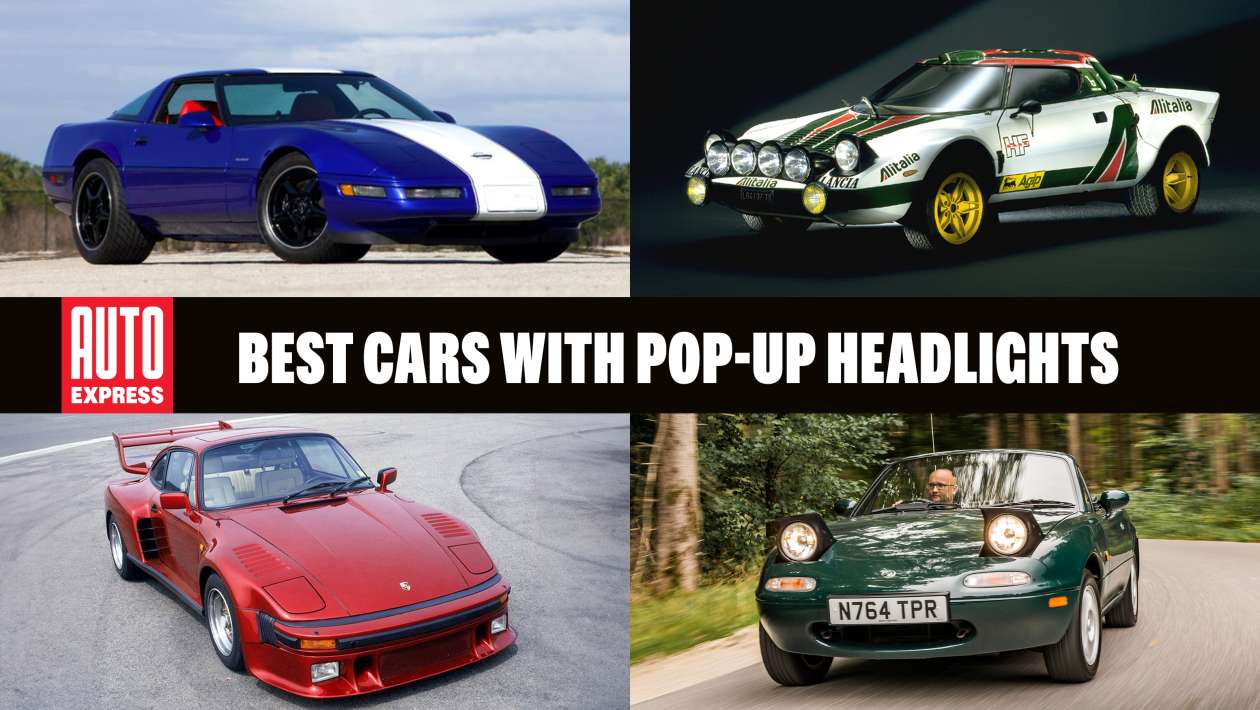
Why simply pop up when your retractable lights can do a backflip? That’s how the headlights on the 1983 to 1996 fourth-generation Chevrolet Corvette operate, with a set of otherwise unremarkable oblong sealed beam units emerging from the bonnet in a balletic twist, and then doing a forward roll when you switch them off again. Very cool indeed, though the relatively low profile of the headlights when up also helped minimise drag.
The Porsche 911’s headlights are one of its defining features. They’ve changed over the years, but that round-eyed look has remained fairly consistent, a brief foray into ‘fried eggs’ with the 996 aside. The other exception was with the turbocharged 930, when in 1983 Porsche offered the ‘Flachbau’, or ‘flat nose’, with styling influenced by the 935 racing car. This meant a more shovel-like profile, the loss of the raised wings, and retractable headlights, completely changing the car’s character. With only 948 built, it’s among the rarer 911 variants.