The thrill of slogging up three flights of steps to the Royal Court’s tiny experimental Upstairs studio is that you never know what you’ll find at the top. Happily, debut playwright Joy Nesbitt’s excellent ancestry drama has a scenario that bites from the get-go, and never relaxes its grip.
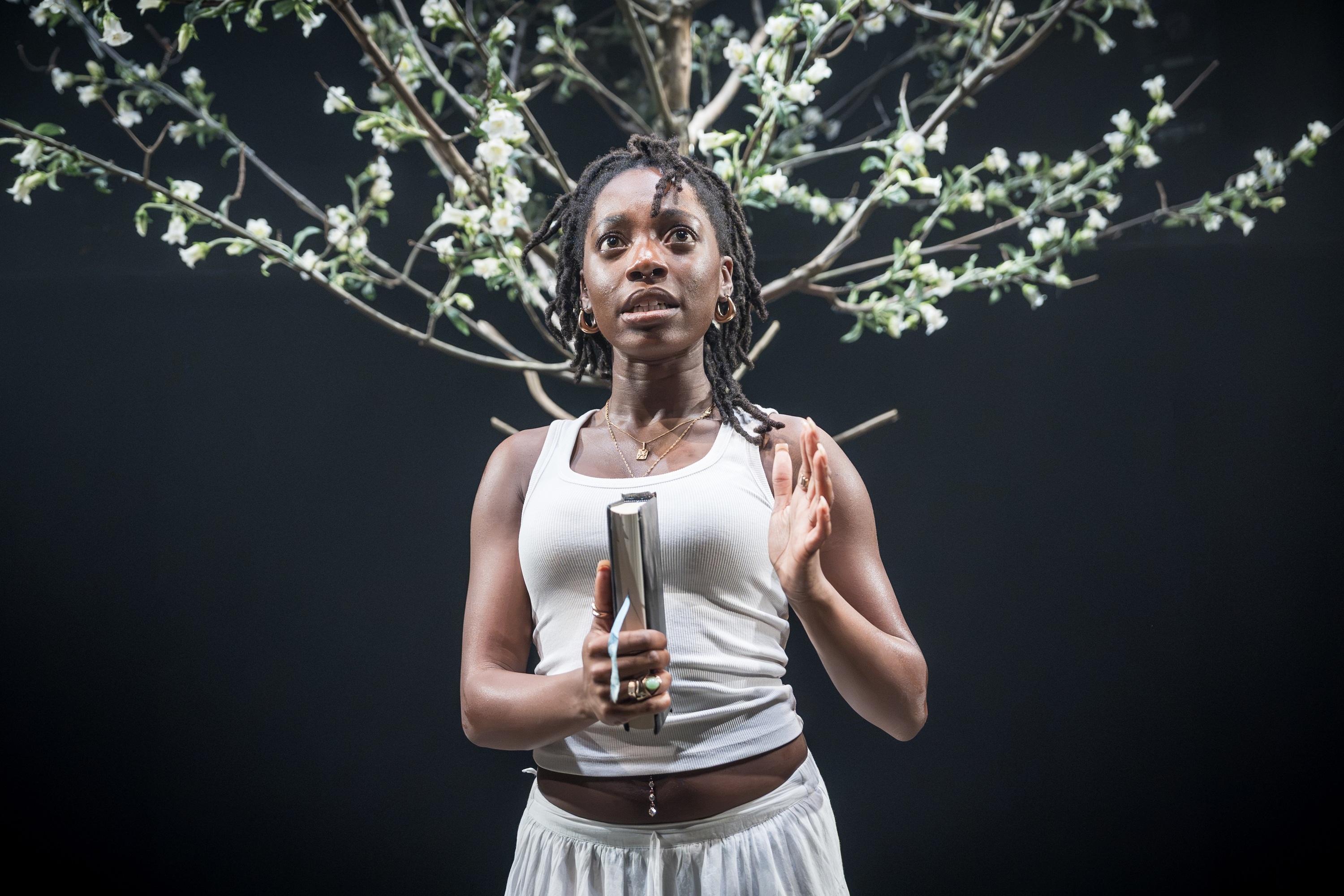
It unfolds in a slave cabin on a cotton plantation in South Carolina, which is now a trendy Airbnb complete with Live Laugh Love poster and a pregnant White superhost Nora, (‘I’m a sympathetic vomiter!’) who is painfully anxious to welcome Talulah, a young Black Londoner into this devastatingly awkward space. Tallulah claims she has come to the slave cabin to ‘really disconnect and, you know, find purpose I guess’. But actually she's here to commune with her ancestress, Ginnie Good, a slave who birthed eight children in this very cabin. In a stirring invocation, Tallullah hangs bottles on the blossoming tree in the dirt patch outside and summons her, chanting ‘I have a right to the tree of life’. Back in 1862, the US Civil War is raging audibly and Ginnie is trying to soothe her baby girl. The women face powerful dilemmas in different eras while briefly sharing the same space.
Nesbitt conjures up all the drama you can find in a slave cabin-turned Airbnb, which is a lot: cringe comedy; morally bankrupt personal drama; cultural satire; pathos and female heroism; hair-raising spiritual connections. Tonally that’s also a lot and, when I saw it early in the run, Tatenda Shamiso’s lively production hit the comic and satirical beats brilliantly but sometimes wobbled when switching to the serious moments, and when sustaining the accents of the Deep South.
Nesbitt’s play has a habit of deftly sidestepping the expected. Its portrait of plantation life allows for affection and loyalty as well as hideosity. She and the actors have scathing, nuanced fun with contemporary qualms of identity, especially the re-appropriation of the plantation as a wedding and party venue and the eagerness of white owner James to identify with his Irish immigrant not his slave owner roots. The cross casting of Patrick Vaill as plantation owner past and present, is an ingenious way of juxtaposing two not entirely villainous white men from different eras and watching them squirm under the scrutiny of the women who are bound to them.
Ultimately, it’s the complex relationships between the women that sing, in both generations. Ronkẹ Adékọluẹ́jọ́ anchors the past scenes, bringing deep feeling, humour and resilience to Ginnie. Hannah Morrish brings comedy and awkward empathy as Airbnb host Nora. Ginnie has so much to contend with in 1862, I felt it was a big ask to conjure her out of it to give contemporary life advice into the bargain, but she nails it.
The play does not push her great-great-great-great grandaughter Talulah nearly as hard, and I’d have liked to see her know less and discover more, giving excellent young actress Jodie Campbell more to grapple with. But Blood of My Blood is a worthy winner of the Concord Theatricals Unpublished Playwrights Award. It's a thoughtful, touching, intelligent, funny and disarmingly gentle drama with strong roles for Black actresses. And a memorable vision of a family tree, festooned with blossoms on its multiple living branches, but with blood at its roots.