Maria Grazia Chiuri has been having more fun with clothes since she decamped from Paris back to her native Rome to work at Fendi. "I have less of a uniform these days. I think it is because being back here makes me feel young again. I'm not sure my daughter appreciates [this attitude]! But I don't care," she said at a preview before her Milan fashion week show.
Not that Chiuri doesn't approach her work as a designer seriously. She described her second ready-to-wear season at Fendi not as a show, or a collection, but as "the second part of the project I am working on for them".
She is continuing the protocol she developed as the designer of Dior of using each event as a platform to celebrate women's creativity. But instead of a ceramicist or a philosopher, her muse for this season is the Italian pop legend Raffaella Carrà.
Carrà, once described as a "one-woman Abba", had a Lady Gaga bob and a taste for sequined catsuits. She caused a sensation with her raunchy outfits – the first bare midriff ever seen on Italian TV, in 1970 – and her sex-positive lyrics (her song A Far L'Amore Comincia Tu translates as "Take the lead when making love").
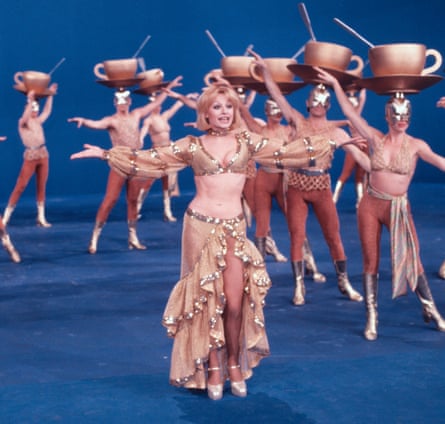
"She was an incredible feminist, and her relationship with her clothes was so free," said Chiuri of Carrà, who died aged 78 in 2021.
On the catwalk, Carrà's influence became diaphanous 1970s dresses with trailing hems, visible lace bras, embroidered waistcoats and vintage fur stoles, while men's shirts were unbuttoned to the navel.
The biggest and starriest show of this Milan fashion week belonged not to any designer, but to Vogue. Galleria Vittorio Emanuele II, Milan's glass-domed cathedral to retail, became a catwalk for a line-up that included Jennifer Lopez in Dolce & Gabbana and Cardi B in vintage Versace, with the singer Alicia Keys and the ballet dancer Roberto Bolle performing live.
Vogue is leaning into live events to amplify its brand and strengthen its coffers as print income declines. Vogue World Milano follows last year's Vogue World: Hollywood in LA, which generated $30m (£23m) in revenue.
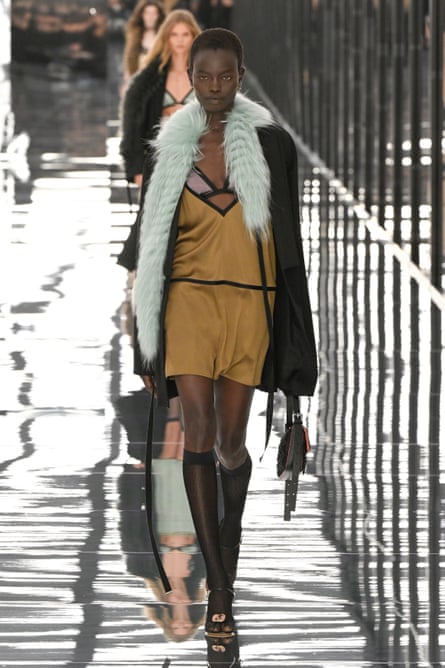
Billed as a celebration of Italian craftsmanship and the human touch in fashion, the event highlighted the stark reality of an increasing dependence on benefactors from Silicon Valley.
Sponsors of the event included Meta Glasses and OpenAI, and the finale included two dancing robots, who were greeted with notably less enthusiasm by the stellar line-up of Italian designers in the front row than the rest of the show.
"The landlords have entered the chat," read one comment beneath a video of the robots circulating on social media.