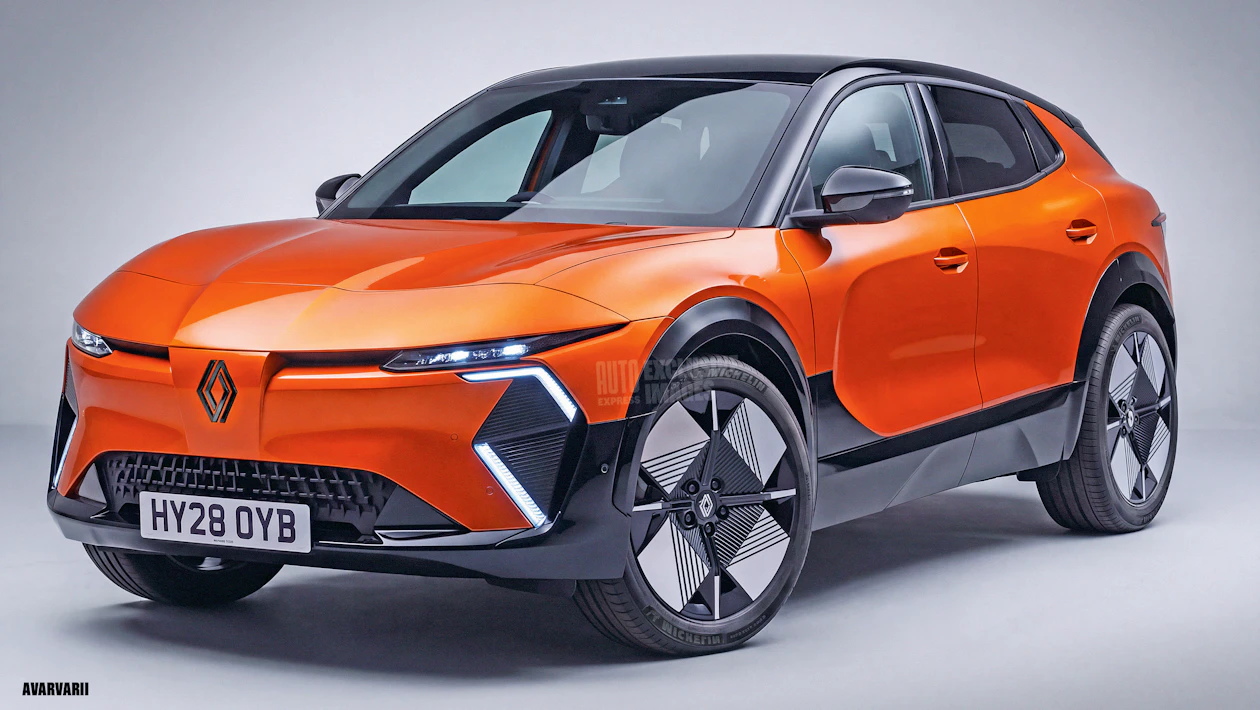
Philippe Brunet, Renault Group’s chief technology officer, then added more technical detail to the project, saying: “When we started the study of this new platform, the idea was to bring something the Chinese don’t have. A C-segment car able to achieve 465 miles WLTP with an LFP battery, maximum two tonnes – you will not find it on the market.”
While BMW EV batteries comfortably eclipse 100kWh, Brunet says that’s much harder in C-segment cars with smaller wheelbases, and at affordable prices. “This is why we believe we need to have a reasonable battery energy level, below 90 kilowatt-hours.” The battery will be installed ‘cell-to-body’ as a structural component, acting as the car’s floor.
By running on this cutting-edge new platform, Renault will futureproof its models to include autonomous driving and steer-by-wire.
Brunet added: “We are not a premium OEM, so we have to take care of our customers [in terms of price]. If you ask me, do you see a real advantage with [technologies like] the steering-by-wire, I will say yes, for different reasons.“But if you ask me if, one day, would you have to put L4 level on the market, which is the upper level in terms of autonomous driving, I will tell that the by-wire tech is mandatory”. With many Chinese firms on the cusp of offering Level 2++ hands-off driving in European mainstream segments as early as 2028, Renault is aware that it needs to keep up.
All this new technology will be packaged into a cabin that looks to the E-Space concept for inspiration. Van den Acker explained: “What you see on the E-Space is kind of what we’re aiming for, with a pillar-to-pillar screen where you really have the main information on the screen, close to the windscreen, because we feel this is, in the end, the least tiring for your eyes.”
This will then be joined by a secondary control touchscreen: “the main action still remains on the central screen. And what we want to do is to move the actions there, and also use voice a lot more to interact with the vehicle, because vehicles will become more intelligent”.
Put all of the pieces together and it’s clear that Renault isn’t just thinking about retaining its current customers, but attracting new, tech-savvy buyers to a model that sounds more like a Tesla Model Y than it does a Renault Megane. The key, however, is that it will be designed with a certain French flair that the company knows is authentic to its values.
Get even more from Auto Express, follow our channels...
• Google
• Reddit
• Whatsapp