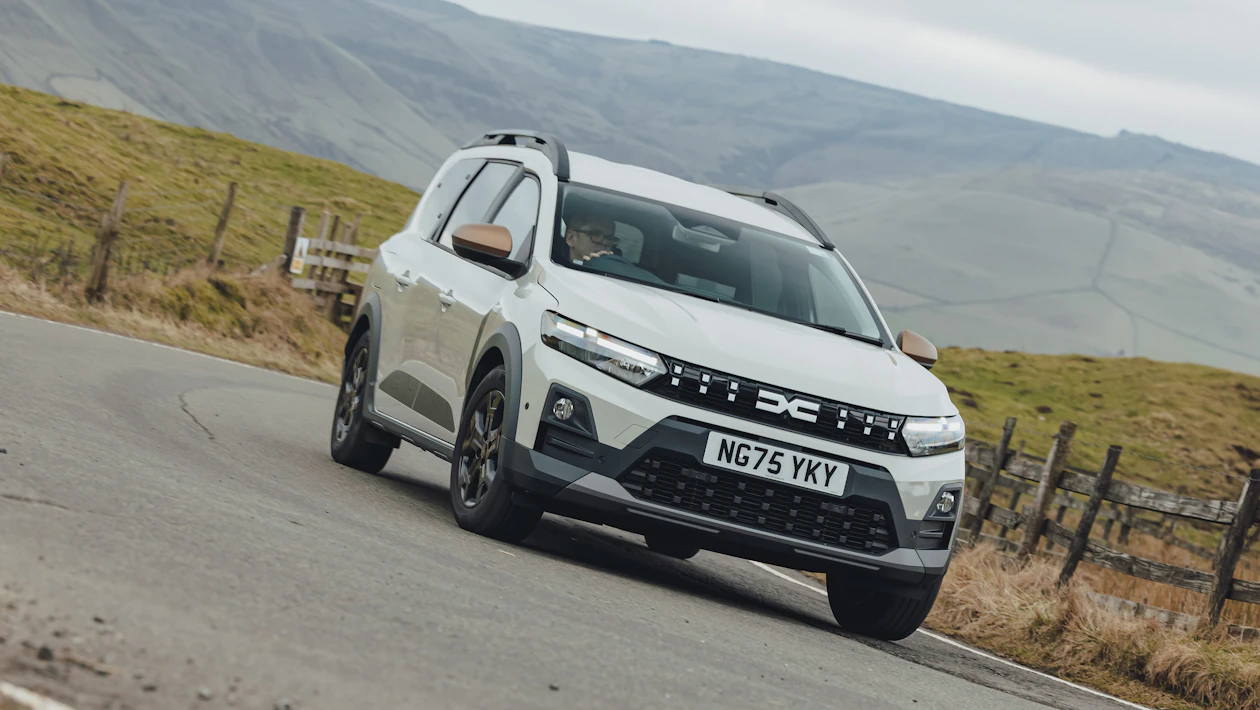
However, given that the current model is so distinctive in the marketplace, we queried whether its success would give Dacia a mandate to include more fundamental variation in design and general packaging as it developed the new model.
Durand responded: “If I were to start with a clean sheet of paper, I would definitely try to move forward the windscreen because it works well to emphasise the roominess of the car. But think of the advantage of sharing the front end with the Sandero. We are saving a lot of money; we can manufacture it on the same line, and there’s a heavy cost advantage to sharing so much with the Sandero.”
From the B-pillar backwards, the Jogger’s expanded bodywork will then be able to fit two further rows of seats and a reasonably sized boot in a rear end that’s styled to sit somewhere between an MPV and an estate.
However, the Jogger’s technical package will be quite different next time around, as Dacia prepares a more flexible architecture for various powertrains in its next Sandero, and by extension the Jogger, too.
Key to this is Renault’s CMF-B platform, which is flexible enough to support both ICE and all-electric powertrains. In the case of the next Jogger, expect to see the option of hybrid and fully electric powertrains in the UK, with CNG or compressed natural gas offered in other markets, too.
The hybrid powertrain will be familiar from the current model, with a 155bhp power figure derived from a 1.2-litre turbocharged engine matched to a small electric motor and battery pack. In the current generation, Dacia quotes a combined MPG rating of around 60mpg, and there’s no reason to think the next-gen car won’t do even better, even if there’s a small weight penalty to contend with.