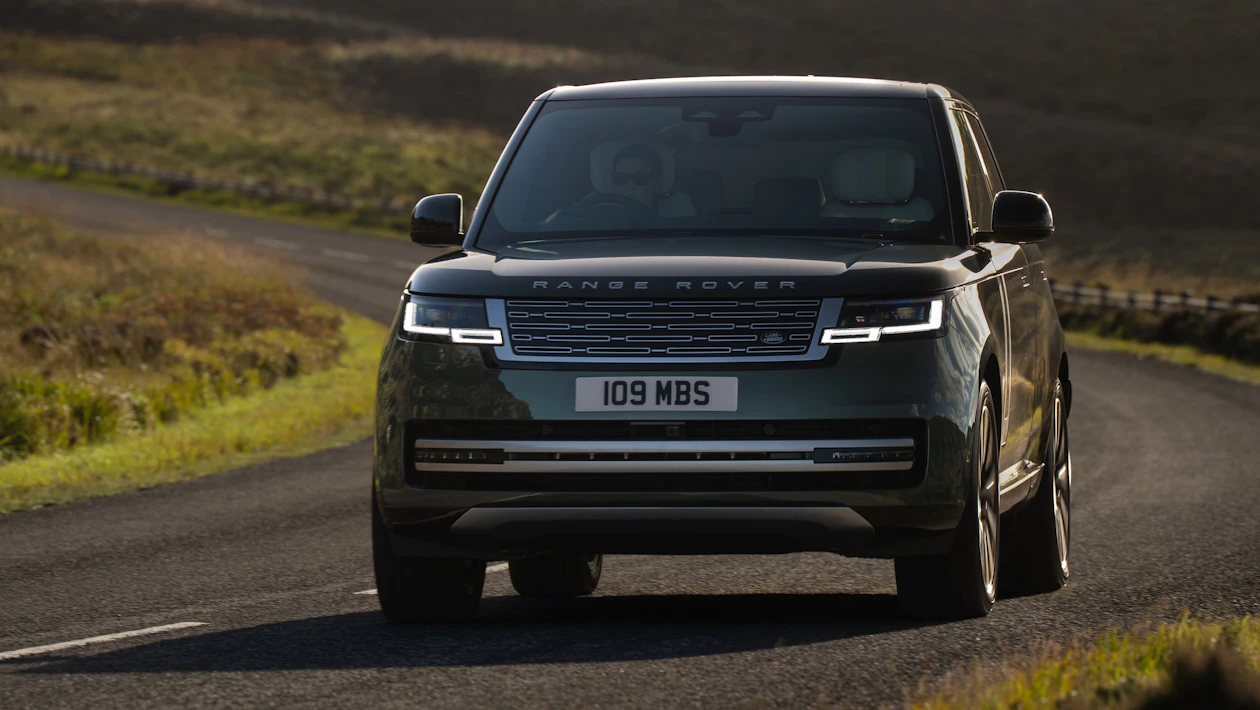
“We’re always looking forward,” says Matt Becker, JLR’s vehicle engineering director. “We’re always optimising and developing the cars for as long as we can, but there will come a point when you need to start looking at future architecture.
“This architecture was conceptualised 11 years ago and it’s starting to get towards the end, I would say. But it’s got at least another five years.”
First we’ll see chassis tweaks and other technology enhancements developed for the Range Rover and Range Rover Sport EVs find their way on to the petrol and diesel models as part of a significant facelift. A more affordable, less powerful EV450 version of the Sport is also due to hit the UK.
Beyond that, improvements to the EV’s battery may be an area the brand looks to explore in the longer term. “We’re locked and loaded on the battery chemistry we’re using right now, but obviously a battery is a given size, it has a given package space. Could you develop it in future and look at different chemistries? For sure.”
We won’t see Range Rover follow Jaguar in a drive even further upmarket, though. In a sense, the EV’s arrival in itself – starting at £110,000 for the Sport or £154,000 for the full-blown Range Rover – has elevated the range. The brand offers the SV Ultra trim level in the Range Rover, which is designed for buyers to spec their own truly high-end model. Prices are ‘on application’, but taking this route to a long-wheelbase Range Rover with all the bells and whistles will get you into the rarefied ballpark of the Bentley Bentayga, if not the Rolls-Royce Cullinan. That’s the very pinnacle of the luxury SUV market where Range Rover feels it belongs.