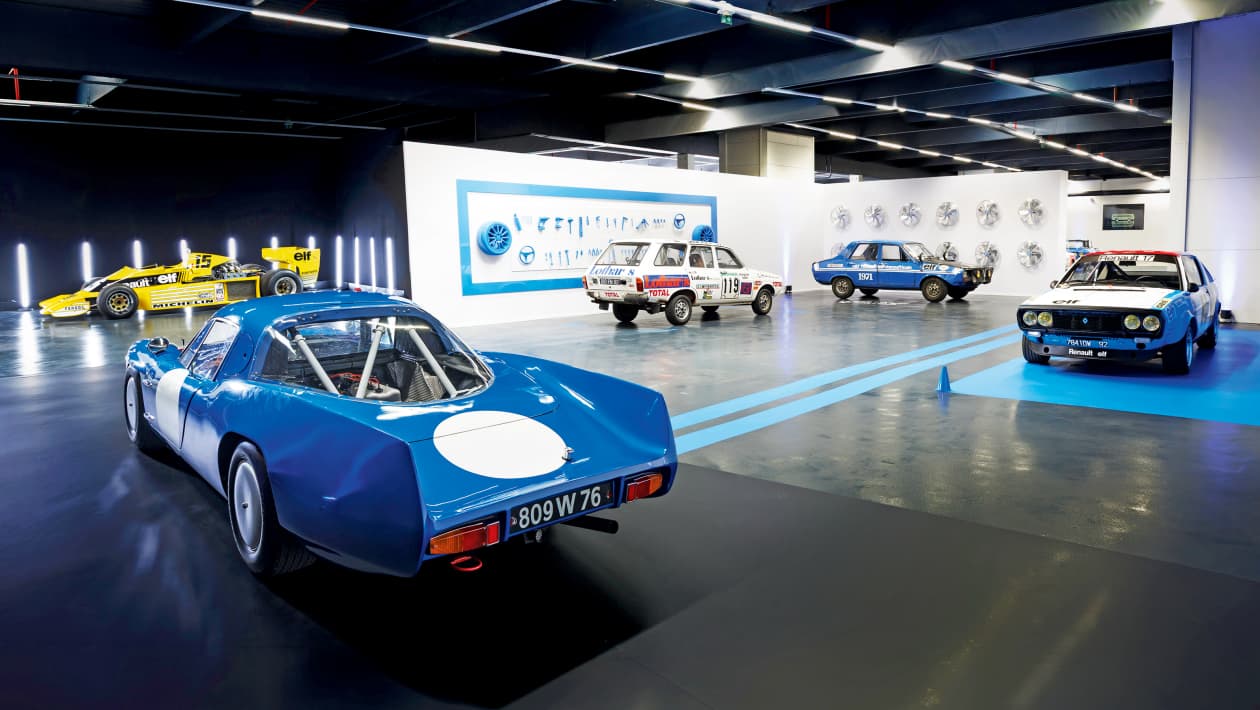
And if there is, there’s no doubt that a revitalised Gordini has a pretty impressive back catalogue to draw inspiration from – as you can see here, in our pick of the brand’s greatest hits – and occasional miss.
It all started when the Dauphine won the inaugural Tour de Corse rally in 1956. Amédée Gordini started working with Renault the next year and more rallying success followed, including victory at the 1958 Monte Carlo Rally. The road-going version featured a 40bhp engine – 25 per cent more than other Dauphines – plus disc brakes all round and a four-speed gearbox. The ultimate Dauphine Gordini, the ‘1093’, arrived in 1962 with around 50bhp.
Perhaps Gordini’s most famous car came when he turned his talents to the humble 8. Its 1.1-litre four-cylinder engine was good for 95bhp, with later versions using a 1.3-litre version. The chassis was uprated to handle the extra poke, and it was easy to tell it was no ordinary 8 thanks to larger headlamps and those now-iconic, offset white stripes on its blue paintwork. Nearly 12,000 were made, and motorsport success came on both circuits and rally stages. It was even used for the world’s first one-make racing series.
This front-wheel-drive follow-up to the 8 never had the same success. It was more powerful, though, with a four-cylinder engine borrowed from the 16 TS and enlarged to 1,565cc to produce 111bhp at 6,250rpm. The same unit, for a time, also powered Formula Renault single-seat racers, while the 12, much like the 8, competed in rallies and circuit races. Along with a more powerful engine than regular 12s, the Gordini also had a then-exotic braking set-up of discs all round (ventilated at the front) and uprated suspension.
Renault won its first World Rally Championship round with a Gordini-tuned 17 in 1974, but the road-going 17 Gordini is less significant. It arrived in the same year as that win, plugging the hole left by the departing 12 Gordini, but it was just a renamed version of the 17TS with no mechanical changes – a common theme for Gordini models in the following decades. The front-wheel-drive coupé featured a 1,605cc, fuel-injected four-cylinder engine and disc brakes all round. Production ran until the 17 was retired in 1979.
In 1976, Gordini and Alpine were merged to create Renault Sport. As debut projects go, Renault’s first F1 car was a bold one, and initially, it didn’t look like the risk was paying off. It retired from races far more times than it finished, with smoky failures of the innovative 1.5-litre turbocharged V6 engine prompting the RS01’s ‘Yellow Teapot’ nickname. A single finish in the points was as good as it got, but it blazed a trail not just for future, more successful Renault F1 cars, but for Formula 1’s bonkers turbo era as a whole.
Arriving in 1979, the year of Amédée Gordini’s passing, the 5 Gordini was the result of another renaming and some regional peculiarities. The Renault 5 Alpine hot hatch couldn’t use that name in the UK because of the Chrysler Alpine, a version of the Simca 1307 sold here at the time. And so, the Renault 5 Gordini was born, but for the UK only. The one you really want is the later Turbo with its then-scorching sub-nine-second 0-62mph time, although both versions are appealing. If you can find either of them for sale, that is.
A purely cosmetic endeavour, but a likeable one, with the fun Renaultsport Twingo 133 enhanced with the classic white racing stripes plus other white accents and special 17-inch alloy wheels. You could spec it in blue or black, the latter missing the point somewhat. It came with the Cup pack as standard, providing lower, stiffer suspension plus an ‘RS Monitor’ for G-meter and lap-timer shenanigans. It was originally priced at an eyebrow-raising premium over the mechanically identical RS model, but on the used market today, you’ll pay a similar amount for both. We’d get the Gordini – and ignore the naff non-RS, TCe 100 version.
Much like the Gordini Twingo 133, the Renaultsport Gordini Clio 200 could also be seen as a missed opportunity, with no mechanical changes over the 200 RS it was based on, despite a notably higher price. That version of the hot Clio has achieved legendary status in the years following its demise, though, so we can perhaps look upon the Gordini take more kindly. It combines the revvy, naturally aspirated engine and engaging chassis of the 200 RS with those iconic looks – what’s not to love? Blue was the best colour, but black and white were also available for those wanting to get it wrong.
A definite low point for the Gordini brand saw it used unceremoniously on the Wind, white stripes and all. Renault’s awkwardly styled and named convertible was hardly a great starting point for a Gordini model, and the execution was half-baked. It didn’t have a single mechanical upgrade, instead being offered with exactly the same 1.2 and 1.6-litre engines as the standard car. Incidentally, the former is actually less powerful than later versions of the Renault 8 Gordini that came decades earlier. Much like the regular Wind upon which it was based, the Gordini version was mercifully short-lived.