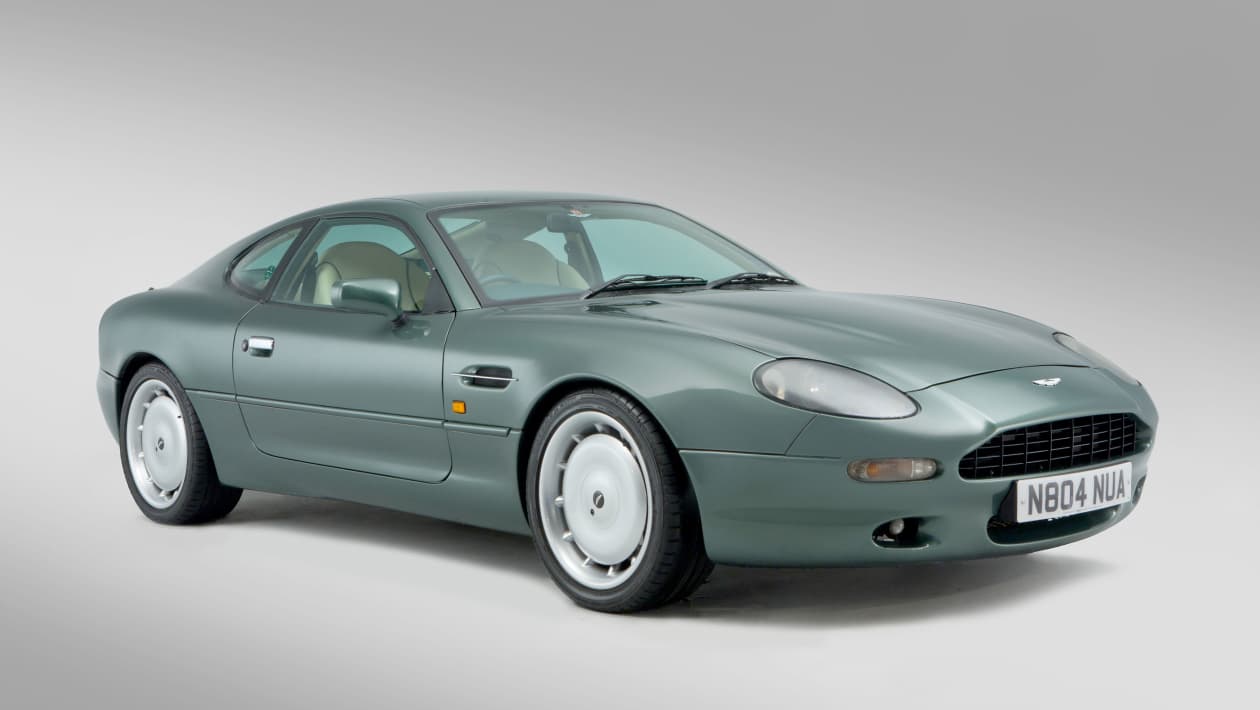
The Porsche 911 has been a performance car standard for more than 60 years; the last of the air-cooled (993) and first of the water-cooled (996) generations overlapped with the DB7, with the former much more valuable than the latter. The Mercedes SL (R129) is a superb GT with six, eight or 12-cylinder engines, while the BMW 8 Series is an appreciating classic. The Ferrari 456 is epic, but running costs can be very high.
What to look for
Spot the rot
Scrutinise the jacking points, radius arm mountings and front bulkhead on any potential buy. Meanwhile, the scuttle and air-con drain tubes can block, leading to the double-skinned bulkhead rotting from inside.
Touch of glass
Inspect the car’s history and see if it’s had a new windscreen. If so, the plastic scuttle trim may have been incorrectly refitted. It often is, leading to water getting into the cabin and the floorpans rotting.
Raise the roof
Problems can arise with the Volante’s roof. The hood’s iron bolts in the rear quarters have rubber covers to protect the fabric, but these can come adrift, allowing the frame to wear holes in the roof.
Not cool
V12 engines use OAT (Organic Acid Technology) anti-freeze and nothing else; if the system is topped up with standard fluid, the two react and turn to jelly, wreaking havoc in the process.
If you’re tall, you might struggle to fit, but it looks great even if some parts don’t wear well, and the Ford switches can grate. Ergonomically there’s room for improvement...
The rear seats are suitable only for small kids; there’s zero legroom if a tall driver is in the front. The boot can stow from 150 (Volante) to 170 (coupé) litres.
Living with an Aston Martin DB7
The DB7’s build quality was initially poor and while things did improve, even late cars are far from bullet-proof. The problem is that many parts (including plenty of body panels) are no longer available, and lots of the bits that you can source are very expensive.
An air-con compressor is £2,800 for example, while a windscreen costs upwards of £1,800. Most owners love their DB7s, but the difficulty of sourcing parts and their high cost can spoil the experience, which is why it’s so important to find a car that’s had money lavished on it and which doesn’t need any immediate expenditure.
Running costs
Running a DB7 doesn’t have to be costly; expect to spend at least £2,000 per year, with i6 running costs significantly lower than for the V12.
The official service interval is every 7,500 miles or six months, but an annual service is usually sufficient. The key ones to watch out for are the 30,000-mile service for six-cylinder models and the 45,000-mile one for the V12, which are expensive. Road tax for pre-March 2001 DB7s is £375 per year; later ones cost £445.
Don't miss out! See more of Auto Express in your Google Top Stories. Click here...