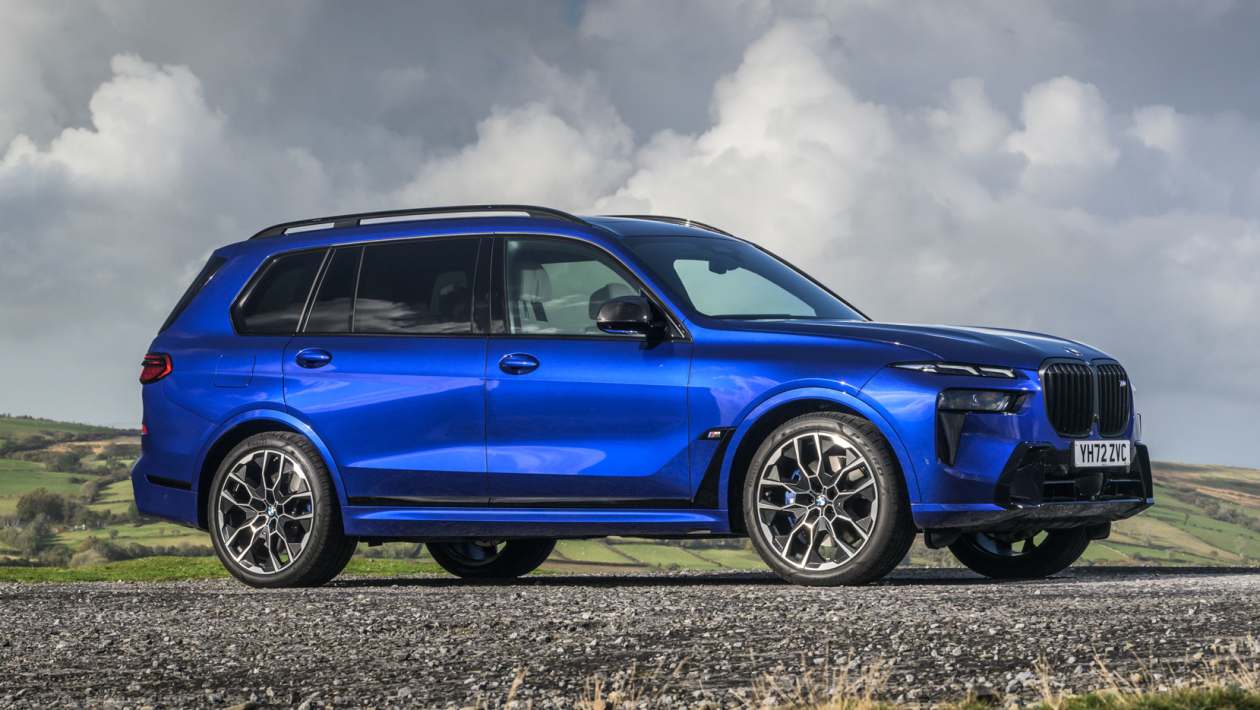
The Range Rover has more sense of occasion but typically only has five seats; if a superb interior matters more than seven seats, consider Bentley’s Bentayga – or even BMW’s X5, which is a fabulous car and more affordable to buy and run than the X7.
What to look for
Sad case
Some early X7s (built up to 2021) could suffer from premature wear to the transfer case, given away by jerky progress at low speeds. Repairs are expensive; regular fluid changes can help to avoid the problem.
In suspense
The X7’s standard-fit air suspension works brilliantly but over time an array of things can go wrong with the system, such as the compressor, height sensors and air struts. See if the car sits lower than expected.
On the pull
You might assume that you can pull pretty much anything with an X7, but unfortunately that isn’t the case. The M50d is restricted to 2,600kg, while the 30d and 40i are able to tow no more than 2,200kg.
All X7s come with run-flat tyres as standard, but some owners have switched to regular rubber, which is cheaper, lighter, lasts longer and produces a more comfortable ride.
It's everything you’d expect: luxurious and crammed with gadgets. The 2022 update brought an even more hi-tech dash, while electric adjustment for all three rows of seats is luxurious. The same goes for the available space; seven seats are standard, six optional. Boot space is great at 326/750/2,120 litres (with seven/five/two seats in use).
Running costs
As you’d expect, running costs won’t be cheap. Condition-based (variable) servicing means there’s no set schedule, but every 16,000 miles or two years is a general rule of thumb. Prices for each service aren’t fixed as such, yet an oil change costs £290-£440 while an interim service is £450-£927, depending on which powertrain is fitted. A major service is pegged at £810-£1,520, and because all X7 engines are chain-driven there are no cambelts to replace.